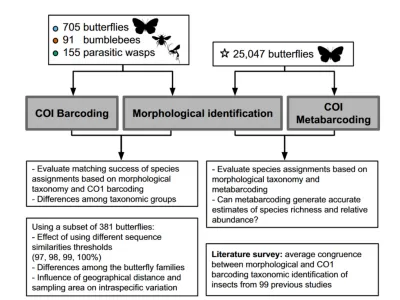
This paper investigates the effectiveness of three methods—DNA metabarcoding, standard barcoding, and traditional morphology-based identification—in identifying insect species and estimating biodiversity. The study evaluates their performance across various insect taxonomic groups (butterflies, bumblebees, and parasitic wasps) by comparing species assignment consistency.
Key findings:
- DNA barcoding showed an average assignment consistency of 49% across taxonomic groups, with parasitic wasps showing the lowest accuracy.
- Metabarcoding provided reliable biodiversity estimates that aligned well with morphological identification results, demonstrating its utility in large-scale biodiversity assessments.
- The study revealed that species assignment consistency is influenced by taxonomic group, sequence similarity thresholds, and geographic distance.
The findings highlight that while challenges remain, DNA barcoding and metabarcoding offer robust alternatives to traditional taxonomy, especially in biodiversity monitoring and conservation.