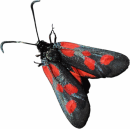
Third-year biology students at Linköping University arranged a weekend workshop on insect identification and DNA barcoding. The event took place on 31 January and 1 February in the Darwin and Linné laboratories at Campus Valla.
Reedbeds are among the most important wetland habitats, providing both high biodiversity and vital ecosystem services. However, reedbeds are declining worldwide, and the causes behind this decline are not always fully understood.
Climate change is enabling oak trees (Quercus robur) to establish further north in Sweden. Warmer winters increase survival rates, while dispersal is accelerated by people planting oaks in gardens at higher latitudes.
A new study shows that three high-priority butterfly species — Parnassius mnemosyne ssp.
A new study from southeastern Sweden reveals that different sampling methods detect very different portions of the beetle community in recently burned forests — especially when it comes to red-listed species.
New Swedish research highlights the crucial role that older, never-clearcut forests plays in supporting biodiversity throughout managed forest landscapes.
Even forests in Sweden that were clear-cut more than 65–85 years ago still harbor significantly lower biodiversity than nature reserves, according to recent research.
A new study from south-eastern Sweden shows that nearly nine decades of strict forest protection have rebuilt key old-growth features — such as abundant deadwood and large living trees — but also led to a major shift in tree species comp
Researchers from Linköping University have recently returned from a research visit to Turkey, where they met with leading experts in forest ecology and entomology.
A new study from a 2021 wildfire site in south-eastern Sweden shows that different tree species, even when burned in the same fire, host strikingly different communities of saproxylic beetles.
A new study comparing spruce-dominated forests in southern Sweden shows that production forests contain significantly less deadwood and lower diversity of saproxylic beetles — especially red-listed species — than nearby nature reserves.
The Department of Physics, Chemistry and Biology at Linköping University successfully conducted a four-day residential taxonomic workshop at Station Linné, focusing on modern techniques for species determination of Hymenoptera (wasps) an
The paper Supporting biodiversity by occasionally abstaining weed control? explores whether skipping herbicide use in arable fields for a single year could benefit biodiversity, particularly pollinating insects.
The paper Distance of movement in three threatened butterfly species investigates movement distances in three threatened butterflies: Euphydryas aurinia (marsh fritillary), Parnassius apollo (Apollo), and P
A new study published in the Scandinavian Journal of Forest Research explores whether the vulnerable orchid Goodyera repens can serve as a reliable indicator of forests with high conservation potential.
Our MSc students Ronja, Ambra and Hedda have completed an intensive field season on Gotland with remarkable results.
A new study published in the Journal of Insect Conservation shows that moths in Sweden are shifting their seasonal activity in complex and trait-dependent ways as the climate warms.
This study investigates the declining population of the threatened woodland brown butterfly (Lopinga achine) in Sweden, a species reliant on semi-open woodland habitats.
New study shows that remnant forests with long-term continuity—those that have never been clearcut—play a critical role in sustaining biodiversity in Sweden's boreal production forest landscapes.
This fresh published study explores how light traps perform under the extreme daylight conditions north of the Arctic Circle.
This month the second year master students presented their thesis and posters with success! Check out the pictures and we wish congratulations to all!
This research paper explores the diversity and distribution of fermentative yeasts found on oak trees in southern Sweden, which represents the northern limit of their oak hosts' range.
A new study led by our researchers reveals that reintroduced Great Capricorn beetles (Cerambyx cerdo) in southern Sweden are capable of dispersing over surprisingly large distances.
A new study examining the long-term population dynamics of moths in southeastern Sweden reveals that despite the record-breaking summer drought of 2018, local moth populations remained remarkably stable.
New research reveals that protected old-growth forests in Sweden host far richer deadwood habitats and greater cryptogam biodiversity than managed production forests.
A new study on the marsh fritillary butterfly (Euphydryas aurinia) sheds light on the impact of habitat edges and grazing on this threatened species.
A new study highlights the surprising value of weeds in agricultural fields as a critical resource for pollinators like bees and hoverflies.
A new study by researchers from Linnaeus University and collaborators explores the relationships between tree age, latitude, and biomass growth in Sweden's forests.
We are pleased to share that our project has been featured in a recent reportage discussing innovative methods in biodiversity conservation.
This week, we're featuring Christoffer, a master's student with a keen interest in beetles.
The team has officially finished measuring oaks and hazel shrubs in the unique Vessers Udde Nature Reserve!
One of our ongoing projects, conducted by Victor Johansson, is on the vulnerable orchid Goodyera repens.
This recent published paper written by our researchers analyzes the influence of recent forest fire history (12 years prior to sampling) on the occurrence of pyrophilic beetles, which benefit from forest fires, in a 10,000 km² region in
This article analyzes the influence of climate change on the effectiveness of protected areas in maintaining biodiversity and ecosystem services.
This paper explores the application of remote sensing technologies to estimate aboveground biomass in young Pinus sylvestris (Scots Pine) stands.
This recently publish paper investigates how small tree and shrub populations have changed over a century of natural succession in a protected meadow.
This paper investigates the effectiveness of three methods—DNA metabarcoding, standard barcoding, and traditional morphology-based identification—in identifying insect species and estimating biodiversity.
New study published examines the dispersal patterns, population sizes, and conservation needs of three globally threatened butterfly species: the Marsh Fritillary, Apollo, and Large Blue.