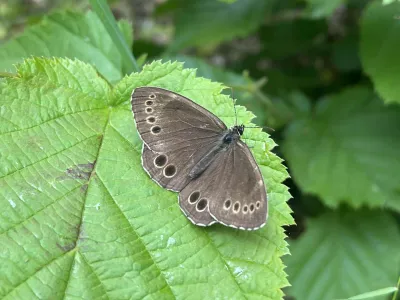
This study investigates the declining population of the threatened woodland brown butterfly (Lopinga achine) in Sweden, a species reliant on semi-open woodland habitats. Researchers conducted a 20-year analysis, combining habitat quality assessments with population surveys and metapopulation modeling, to understand the impact of land-use changes and management practices. Their findings reveal that while the butterfly thrives in ungrazed patches with approximately 70% tree and shrub cover, both intensive grazing and the complete absence of management (leading to forest overgrowth) severely reduce population numbers. The study concludes that strategic management, specifically selective clearing of overgrown areas every decade, is crucial for stabilizing the metapopulation and ensuring the long-term persistence of this species and other semi-open woodland specialists.