A new study from south-eastern Sweden shows that nearly nine decades of strict forest protection have rebuilt key old-growth features — such as abundant deadwood and large living trees — but also led to a major shift in tree species composition toward Norway spruce.
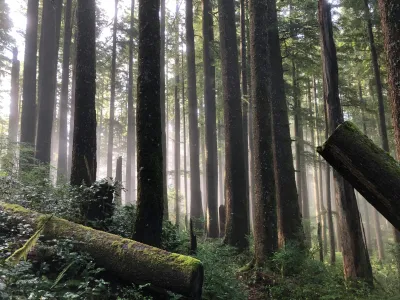
Researchers resurveyed every tree in a 10.4-hectare reserve first mapped in 1937. Despite a 22 % decline in stem density, the forest's basal area increased by 6 %, living volume by 12 %, and deadwood reached 190 m³/ha, levels typical of old-growth forests. Large trees (≥45 cm DBH) increased by 20 %, and tree species richness rose from five to thirteen.
However, forest composition changed dramatically. Norway spruce now accounts for 62 % of all stems, while Scots pine declined by 40 %. Recruitment was overwhelmingly spruce-dominated (90 % of 6,276 new stems), and pine recruitment dropped in wetter areas. These trends show that passive protection can restore structure but may not maintain historical species diversity.
The authors suggest that targeted actions — such as light thinning or controlled fire — could help counteract the ongoing "sprucification" while preserving valuable old-growth characteristics.