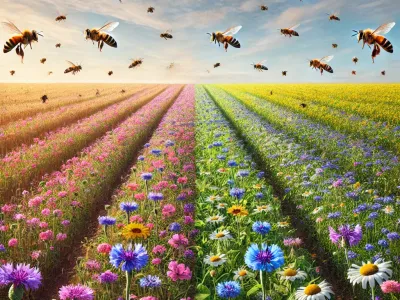
A new study highlights the surprising value of weeds in agricultural fields as a critical resource for pollinators like bees and hoverflies. Conducted in Östergötland, Sweden, the research reveals that these often-overlooked plants provide essential floral resources, particularly in organic farming systems.
By sampling weeds and pollinators across 30 fields, the study found that organic fields significantly outperformed conventional ones in supporting pollinator-friendly weeds and fostering greater pollinator abundance. Notably, the presence of flowering weeds positively correlated with bee and hoverfly populations, showcasing the importance of these plants in maintaining biodiversity within intensively cultivated landscapes.
Over 100 pollinator species were identified, demonstrating the potential of arable fields to serve as critical habitats. The findings suggest that even conventionally farmed land, often regarded as non-habitat, holds value for biodiversity when weed management practices are adjusted.
This research underscores the need to rethink weed management in agriculture, advocating for practices that balance crop production with the conservation of pollinators essential to ecosystem health.