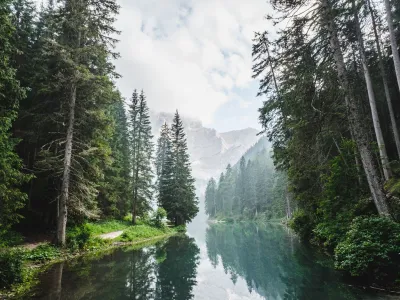
New study shows that remnant forests with long-term continuity—those that have never been clearcut—play a critical role in sustaining biodiversity in Sweden's boreal production forest landscapes.
The study examined over 900 spruce trees across 16 forest areas in northern Sweden, analyzing the presence of 164 species of epiphytic lichens. It found that even-aged production forests (younger than 80 years) hosted significantly more species, including red-listed species, when surrounded by a higher proportion of continuity forest. In contrast, older selectively harvested stands (81–120 years) already supported high species richness and were less influenced by nearby continuity forests.
"These forests act as biodiversity reservoirs and dispersal sources for surrounding managed stands," says lead author Lena Gustafsson. "Their presence increases the richness of sensitive lichen species even in intensively logged areas."
The findings have direct implications for forest management and conservation. As clearcutting continues to expand across the boreal zone, preserving the remaining continuity forests is vital—not just as biodiversity hotspots, but also as natural allies in supporting species recovery across managed landscapes.