
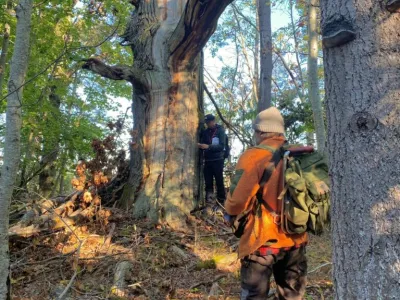
This recently publish paper investigates how small tree and shrub populations have changed over a century of natural succession in a protected meadow. The study revisits an area in southern Sweden that ceased traditional management practices like mowing in 1923, allowing the natural progression of the landscape from a meadow to a forest. By comparing data from a 1937 survey with fieldwork conducted in 2023, the authors found a significant decline in both population density and canopy cover of the species studied. Despite this, some trees and shrubs have persisted, demonstrating the slow pace of ecological change and highlighting the potential for restoration in semi-open landscapes.
This study emphasizes the importance of traditional land-use practices for maintaining biodiversity and suggests that without management, such species may continue to decline. The paper contributes valuable insights for conservationists and land managers looking to balance natural succession with the preservation of species-rich habitats like wooded meadows.