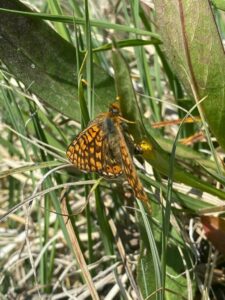
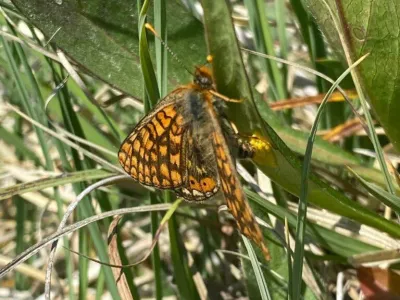
A new study on the marsh fritillary butterfly (Euphydryas aurinia) sheds light on the impact of habitat edges and grazing on this threatened species. Conducted on Gotland, Sweden, the study analyzed butterfly flight behavior at the boundary between intensively grazed and ungrazed habitats, providing critical insights into conservation strategies for this species.
Key findings:
- Marsh fritillaries were significantly less likely to cross from ungrazed to grazed areas, suggesting that intensively grazed habitats act as barriers to movement.
- Host plant abundance (Succisa pratensis) was a key factor influencing small-scale habitat use, with butterflies showing a strong preference for areas with higher host plant density.
- Nectar plant abundance and distance from grazed edges had a lesser impact on habitat utilization.
- Intensive grazing reduces habitat connectivity, potentially isolating populations and making long-term survival more difficult.
Conservation implications:
The study underscores the need for low-intensity grazing management to maintain suitable habitats for the marsh fritillary and other grassland butterfly species. By preserving well-connected, ungrazed grasslands, conservation efforts can help mitigate the negative effects of habitat fragmentation and ensure the persistence of butterfly populations.
Source links