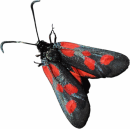
Investigate the ecology, behaviour, and conservation of three threatened butterfly species (Euphydryas aurinia, Parnassius apollo, and Phengaris arion) on Gotland, with a focus on population dynamics, dispersal patterns, and habitat requirements. The project aims to inform conservation strategies to protect and manage these species in their natural habitats.
Project outline:
1. Population size and density estimation: Conduct mark-recapture studies to estimate the population sizes, density, and lifespans of the three butterfly species across Gotland. Utilize grid-based surveying to monitor changes in population distribution over time, identifying core habitats and regions of high butterfly density.
2. Dispersal and movement dynamics: Analyze butterfly dispersal patterns using mark-recapture data and movement kernels. Focus on understanding the distance travelled by individuals and how this varies between species and sexes. Investigate density-dependent dispersal mechanisms to determine how local population density influences emigration and immigration rates.
3. Habitat preferences and threats: Study the habitat preferences of each species, focusing on semi-natural grasslands, calcareous grasslands, alvar habitats, and their associated floral resources. Identify and map current threats, such as habitat degradation, land-use changes, limestone quarry expansions, agricultural intensification, and climate change. Assess the impact of habitat quality and connectivity on the population viability of each species.
4. Behavioural ecology: Examine sex-based differences in dispersal behaviour, mating patterns, and resource use, especially focusing on factors influencing female site fidelity and male mobility. Study the behavioural responses of butterflies to environmental factors such as temperature, precipitation, and habitat structure.
5. Long-term monitoring and conservation strategies: Establish a long-term monitoring program to track changes in population sizes, distribution, and dispersal patterns over time. Develop and propose conservation strategies tailored to the specific needs of each species, such as habitat management practices (e.g., traditional grazing, mowing) and the creation of habitat corridors to support metapopulation dynamics. Promote adaptive management approaches to ensure the persistence of these butterfly populations in a changing landscape.
6. Public engagement and education: Engage with local communities and stakeholders to raise awareness of butterfly conservation and the importance of semi-natural habitats. Develop educational materials and citizen science initiatives to involve the public in monitoring efforts and habitat restoration activities.
Expected outcomes
This project will enhance our understanding of the ecology and behaviour of threatened butterfly species on Gotland. It will provide valuable insights into the effects of habitat fragmentation, density-dependent dispersal, and the implications for conservation management. By identifying key habitats and proposing evidence-based conservation strategies, the project aims to contribute to the long-term survival of these species in the face of environmental change.