Central Research Questions
The key objectives, in this thesis by Judith Vollmer, are to link cattle activity to vegetation by analyzing how vegetation diversity, canopy cover, and soil moisture affect grazing patterns, to identify indicator species by assessing whether specific plant species correlate with cattle activity, and to examine environmental influences by comparing the role of vegetation with other factors, such as weather and water availability on cattle behavior.
Background and Aims
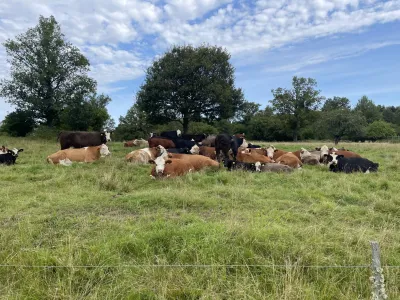
The study explores the relationship between semi-natural grassland heterogeneity and grazing cattle behavior in Tinnerö Nature Reserve, Sweden. The research aims to understand how vegetation diversity and environmental factors influence cattle movement and activities such as grazing, resting, and fouling. The research underscores the importance of integrating animal behavior studies with vegetation management. Insights from this study contribute to optimizing grazing practices for biodiversity conservation in semi-natural grasslands.
Key findings
Vegetation preferences: cattle activity, particularly grazing, is concentrated in areas with higher grass coverage and moderate canopy cover.
Indicator species: abundance of certain herbs and grasses is strongly linked to grazing hotspots.
Environmental effects: weather conditions, especially temperature and humidity, significantly influence cattle movement, often overriding vegetation preferences.
Conservation implications
Promoting diverse vegetation structures can enhance grazing distribution and biodiversity. Integration of factors: effective management must balance vegetation diversity with environmental factors to support ecosystem health.