Central Research Questions
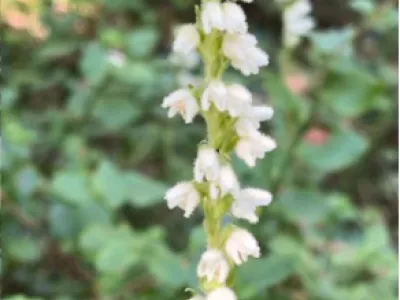
The project, conducted by Victor Johansson, aims to identify the habitat requirements of Goodyera repens (knärot in swedish), analyze the population trends over the past 30 years, develop models to predict G. repens occurrence patterns, and validate G. repens as an indicator species for other threatened species.
Background and Aims
The intensification of forestry has negatively impacted many species dependent on old-growth forests in Sweden, including the threatened orchid G. repens, classified as vulnerable (VU). This orchid is believed to be strongly associated with old, moss-rich continuous coniferous forests and serves as an indicator of forests of high conservation value with other threatened species. The project will provide practical tools for sustainable forestry management, guide decisions on logging, and contribute to achieving the environmental goal of "Living Forests." It will also assess if G. repens effectively signals high nature value areas with other threatened species.
Methods
Habitat analysis uses data from the National Forest Inventory's permanent sample plots to analyze detailed habitat requirements. Population trends are assessed to predict future development under different forestry management scenarios. A habitat model is developed and validated using GIS data that are available to the public. Field visits are conducted to validate model predictions. The indicator value is assessed by surveying other indicators of old forests with high biodiversity in relation to the occurrence of G. repens (stands with and without the species).