Year
2025
Publication type
Peer-reviewed article
Journal
Biological Invasions
Volume
27
Issue
9
Article number
194
Files
Document
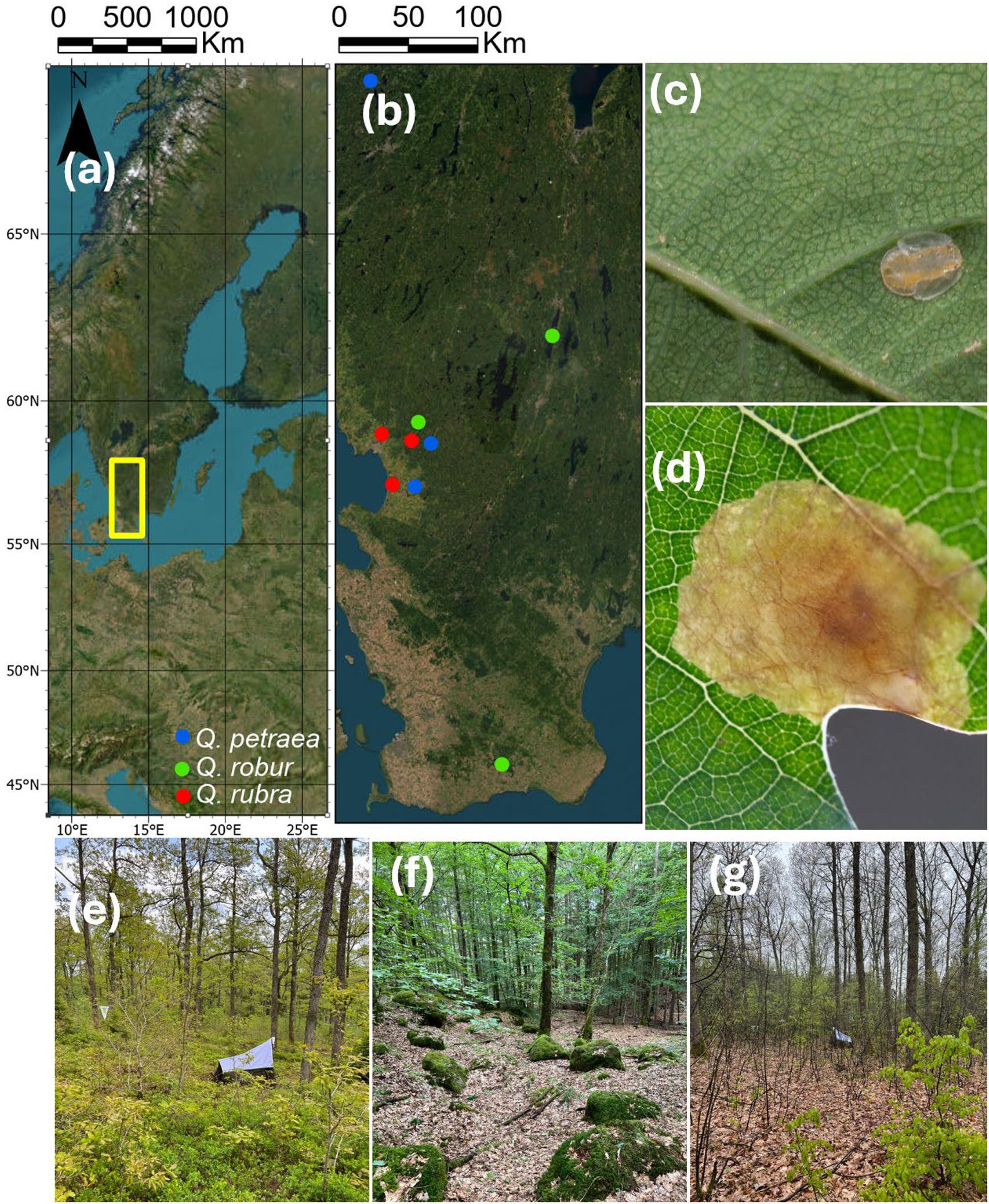
Abstract
Abstract Introducing non-native tree species into forest ecosystems is a growing trend, in part as climate change may cause a decline of native species and shifts in species distributions. In European forestry, Quercus rubra (northern red oak) has increasingly been considered a candidate substitute species for native oaks. However, it remains largely unknown how this substitution affects associated biodiversity. This study compares the biodiversity supported by the native oak species Q. petraea (sessile oak) and Q. robur (pedunculate oak) and the invasive Q. rubra in southern Sweden, focusing on both oak-associated organisms and general forest biodiversity. Arthropods were sampled using Malaise traps at the site level. At the same time, vascular plants, leaf herbivory and endophytic insects (leaf miners and gallers) were recorded at the tree level in three sites per oak species. Our results reveal guild-specific effects of oak species on biodiversity. The introduced Q. rubra supported significantly fewer endophytic insects than native oak species. Vascular plant species richness was marginally lower in Q. petraea and Q. rubra sites compared to Q. robur. In contrast, the species richness, abundance, biomass and community composition of arthropods and leaf herbivory did not differ significantly between the three oak species. These findings indicate that the ecological consequences for biodiversity of introduced tree species, such as Q. rubra, are most pronounced for specialised herbivores, including leaf miners and gallers, and suggest that broader forest biodiversity measures may be less responsive to changes in tree species than to local environmental conditions.