Year
2025
Publication type
Peer-reviewed article
Journal
European Journal of Wildlife Research
Volume
72
Issue
1
Article number
3
Files
Document
Abstract
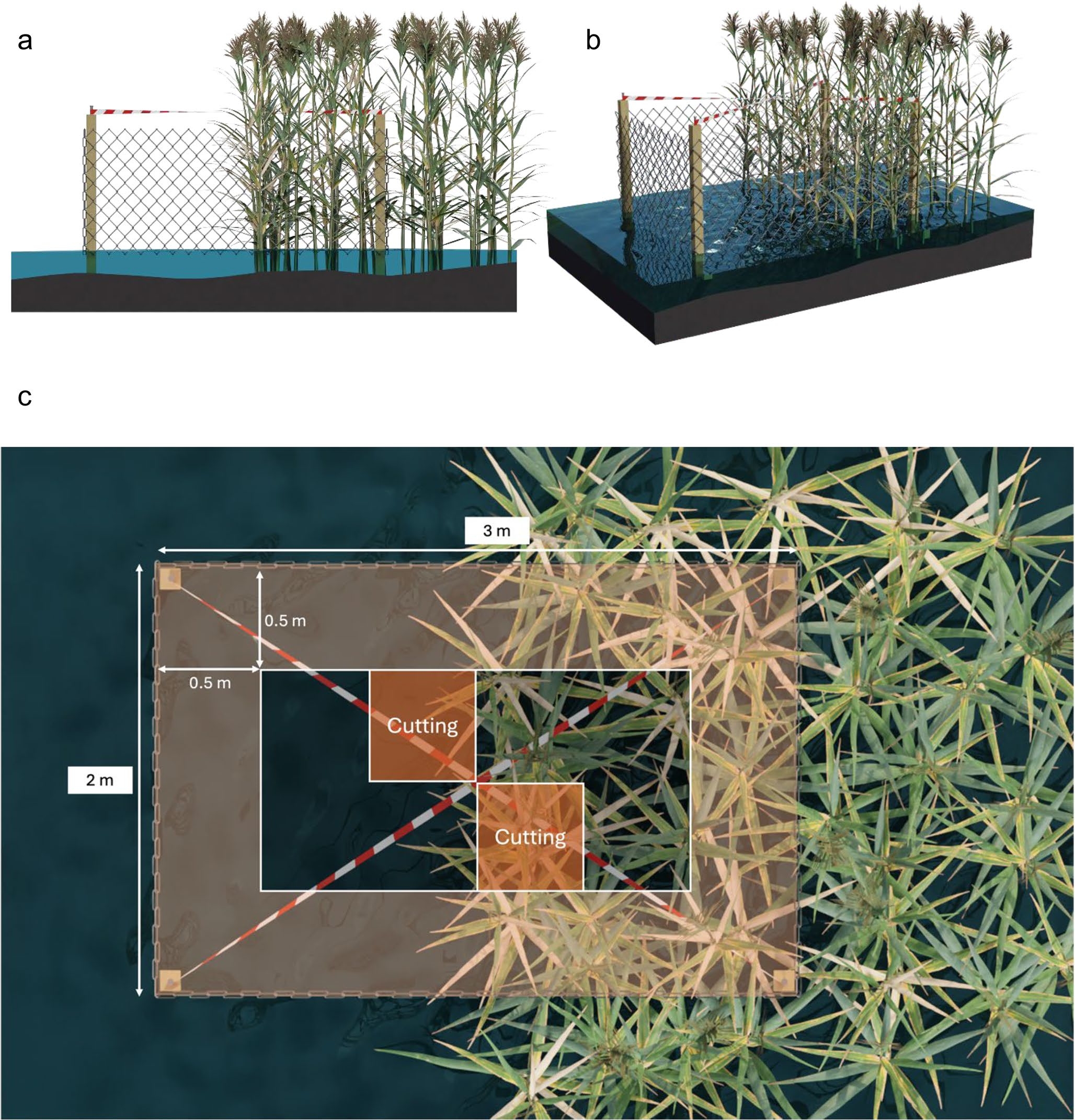
Abstract Natural wetlands, including reedbed ecosystems, are globally declining in area and quality at an alarming rate. Given their importance for biodiversity and provision of ecosystem services, understanding the causes of reedbed decline is essential for conservation. Previous research shows that grazing by geese can have a strong impact on emergent vegetation in both Arctic and temperate wetlands. In this study, we used exclosures to examine the direct impact of grazing by greylag goose Anser anser on common reed Phragmites australis , as well as indirect effects on macroinvertebrates, during one season (April–August, 2023) in Lake Tåkern, Sweden. In this eutrophic lake, the number of geese has increased during the last decades, simultaneously with a decline in reedbed area. The experiment revealed significant impacts on reed growth variables already in early June. In open (control) plots, reed shoots were shorter than in the exclosures. This difference remained throughout the season. Moreover, at the end of the experiment, reed biomass was lower and horizontal expansion smaller in the control plots. However, no significant effects were observed for reed stem density, or aquatic invertebrates (number of taxa and total abundance). As the exclosures led to expansion of new reed shoots and higher biomass, we suggest that temporal fencing could contribute to protection and reestablishment of reedbeds in this lake. We also suggest that further studies should explore whether grazing impacts can propagate through the rhizome-connected clonal network, potentially inhibiting neighbouring shoot growth and weakening reed’s resistance to herbivory.