Year
2025
Publication type
Peer-reviewed article
Journal
Scandinavian Journal of Forest Research
Volume
40
Issue
5-6
Pages
273-281
Files
Abstract
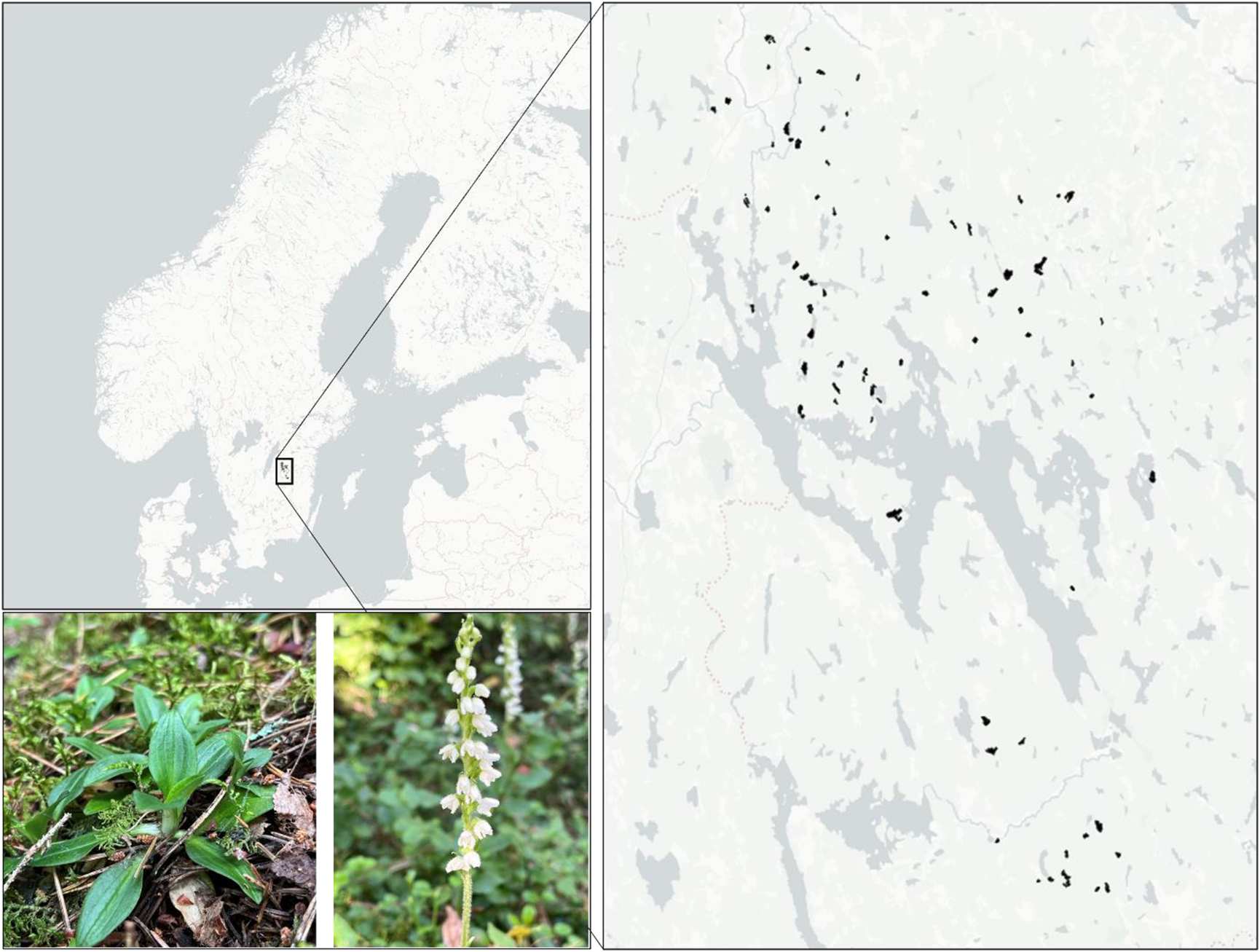
Indicator species require empirical validation for reliable conservation assessment. We evaluated the effectiveness of Goodyera repens, a threatened and legally protected orchid in Sweden, as an indicator of forests with high conservation potential. We surveyed conifer-dominated stands: 40 containing G. repens, 20 similar-aged stands without it (“old stands” 88–171 years), and 20 randomly selected stands of various ages in Östergötland, southeastern Sweden. We measured habitat heterogeneity scores (HHS), dead wood volumes, tree diameters, stand age, and presence of conservation concern species. Stands with G. repens contained significantly more species of conservation concern (mean 2.9) than old stands (1.85) and random stands (0.55), and showed higher habitat heterogeneity and dead wood volumes. Habitat heterogeneity was the strongest predictor of species richness, while stand age best predicted red-listed species occurrence. G. repens abundance showed no correlation with conservation species richness at stand level but correlated significantly at plot level (50 × 50 m), making the species potentially useful for identifying retention areas during logging. While G. repens can indicate forests with conservation value, direct assessments of habitat heterogeneity and stand age provide more reliable biodiversity predictions. We recommend combining species-based indicators with structural habitat measurements for more effective identification of high-value forests in human-dominated landscapes. ARTICLE HISTORY Received 8 April 2025 Accepted 30 June 2025 KEYWORDS : Boreal forest; conservation planning; dead wood; forest structure; habitat heterogeneity; stand age