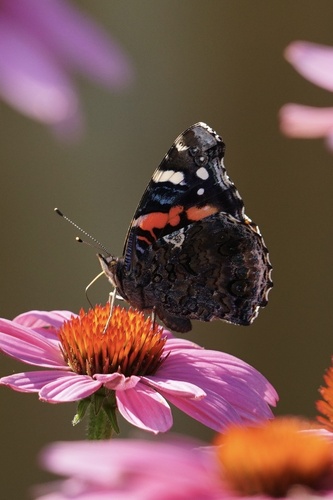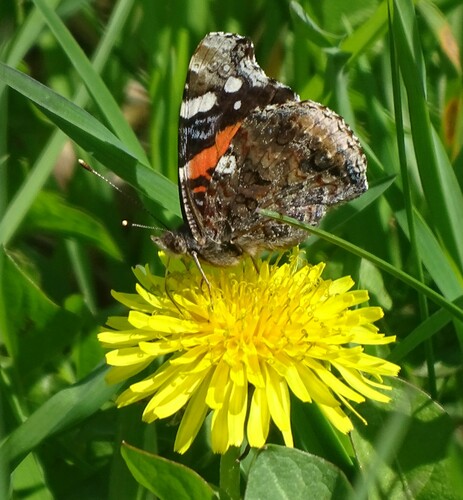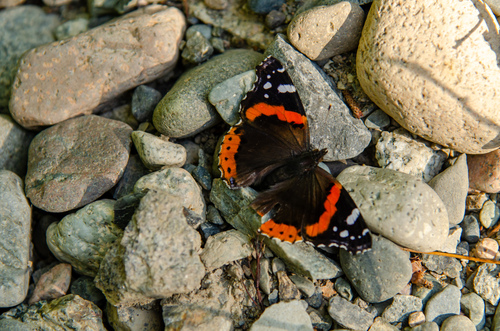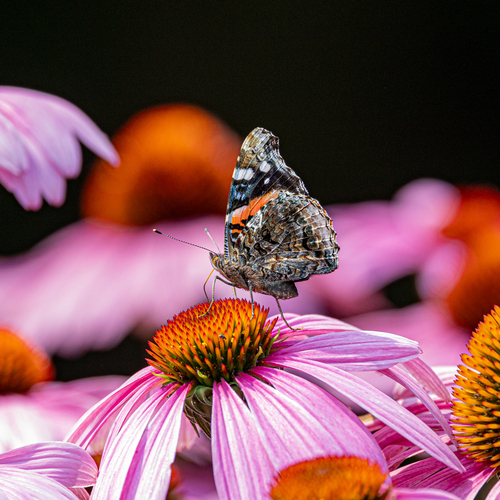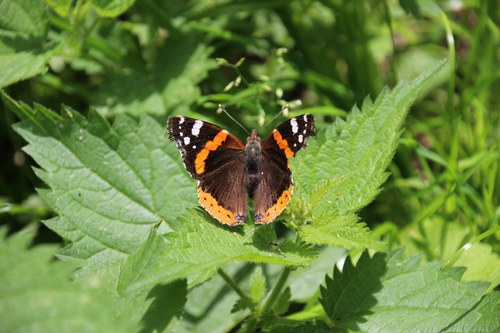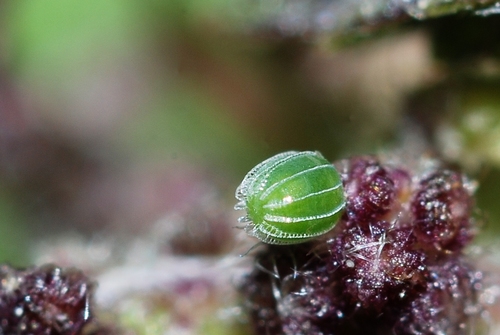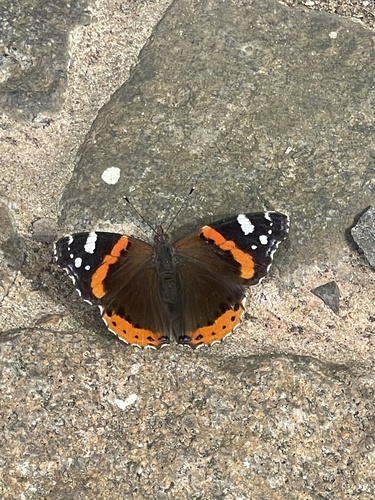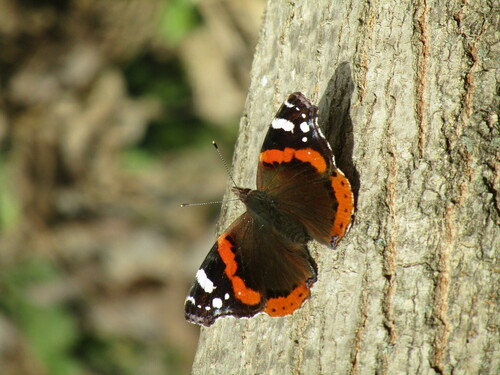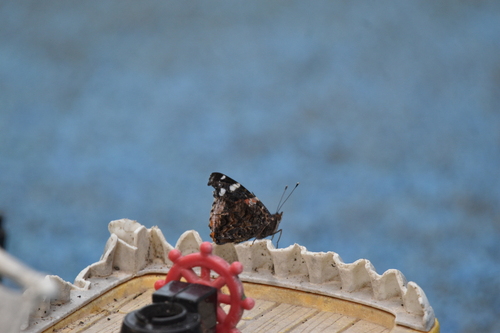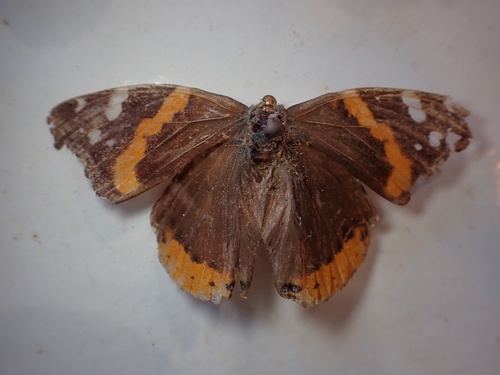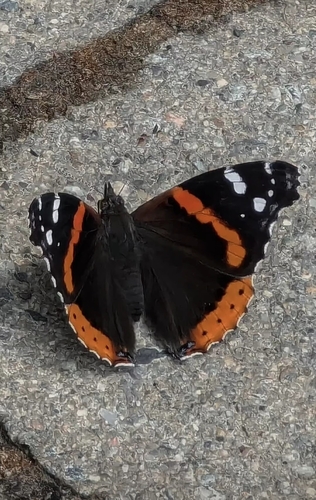
Red Admiral - Vanessa atalanta (Linnaeus, 1758)
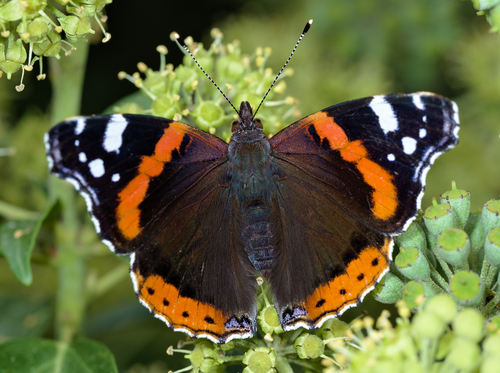
Source: Wikipedia
Synonyms 28
- 3,172,997 GBIF occurrences
- 286,234 iNaturalist observations
This species occurs in a number of protected areas across its range. No specific conservation actions are needed at the European level, but populations should continue to be monitored by butterfly monitoring schemes.
The Red Admiral is a wide-ranging, migratory butterfly that in temperate areas can only survive the winter where it is exceptionally mild, though the area with successful overwintering seems to be moving north in the last decade. Each year, butterflies from southern Europe fly northwards and in good years Red Admirals can be seen practically everywhere. They are often seen in gardens and parks. The butterflies need a lot of nectar and also feed on rotting fruit and resin oozing from trees. The Red Admiral is a distinctive and beautiful butterfly, the unusual, contrasting colours prevent it from being confused with any other species. It usually lays its eggs on Stinging Nettle (Urtica dioica) but can also use Pellitory-of-the-Wall (Parietaria judaica). Eggs are laid in sunny, but not too dry places. The caterpillars live alone or in small groups in small tent-like shelters made by spinning leaves together. The caterpillars of the Red Admiral are variable in appearance, ranging from yellow with black spots to plain dark-brown to black. They also pupate in a little tent of spun leaves. Habitats include humid grasslands and tall herb communities (9%), mesophile grasslands (9%), urban parks and large gardens (7%), agricultural land and artificial landscapes (6%), broad-leaved deciduous forests (6%), mixed woodland (6%) (van Swaay et al. 2006).
This is a migrant species that cannot survive winters in the northern half of Europe or in the mountains. Each spring and summer these areas have to be recolonised from southern regions of Europe and North Africa.
European regional assessment: Least Concern (LC)EU 27 regional assessment: Least Concern (LC)The Red Admiral is listed as Least Concern, as it has been evaluated against all the IUCN criteria and does not meet, nor is it close to meeting, the thresholds for any category of threat in Europe or the EU 27 region.
This species is not believed to face major threats at the European level.